
Key Takeaways
- Aluminum is durable and dimensionally stable, but it transfers heat more readily than many frame materials.
- Thermal breaks, insulated glass, and careful window placement matter more than the frame material alone.
- Aluminum does not rust like steel, yet water control still depends on drainage, seals, flashing, and installation.
- Wind resistance depends on the complete window assembly, including size, hardware, glass, weatherstripping, and anchoring.
- A good selection conversation starts with each opening’s sun, exposure, room use, and maintenance needs.
Why Does Weather Reveal Frame Performance?
Aluminum window frames can perform well across changing conditions, but the best choice depends on how the whole window handles heat, water, moving air, and direct sun. Homeowners considering replacement windows Loomis, CA should look beyond the frame’s appearance and ask what is happening at the glass edge, sill, seals, and connection to the wall.
Weather exposes weak points that may not be obvious on a mild day. A frame can look straight, operate smoothly, and still allow uncomfortable surface temperatures or unwanted air movement when outdoor conditions become more demanding. That does not mean aluminum is automatically the wrong material. It means the frame design needs to suit the opening and the rest of the window system.
Aluminum is valued for strength, slim profiles, and a clean architectural look. Those benefits can be especially useful for larger fixed openings and modern designs. The trade-off is that metal conducts heat efficiently, so an aluminum frame requires more careful attention to thermal design than a frame made from a less conductive material.
Heat Moves Through Aluminum Differently
Aluminum moves heat and cold through the frame more easily than vinyl, fiberglass, or wood-based frame materials. On its own, a basic aluminum frame can transfer outdoor temperatures toward the inside edge of the window. That can affect comfort near the opening, even when the glass looks clear and the window is properly closed.
A thermal break helps address this issue. It is an insulating barrier built into the frame that interrupts the direct path of heat flow through the aluminum. Thermally improved aluminum frames are not all built alike, so ask how the frame separates interior and exterior metal sections rather than assuming every aluminum option performs the same way.
The glazing package matters just as much. Insulated glass units, low-emissivity coatings, spacer systems, and the glass thickness all influence how much solar heat enters a room and how warm the interior glass surface feels. A strong frame paired with unsuitable glass can still leave a room too warm in direct sun or too cool beside the window after temperatures drop.
What Happens During Hot Sunny Days?
Aluminum handles direct sun without warping in the way some materials may under extreme heat, but the frame can become hot to the touch when exposed. The larger concern indoors is solar gain, which is heat entering through the glass and warming the room.
For a window facing strong afternoon sun, compare the glass coating and solar-control properties with the room’s purpose. A bright living area may benefit from daylight while still needing glass that limits excess heat. A room where people sit close to the window may need more attention to interior comfort than a less-used area.
Frame color and exterior shading can also affect surface temperatures. Dark finishes absorb more solar energy, while overhangs, screens, and landscaping may change how much direct sun reaches the opening. These details do not replace a suitable glass package, but they can change the conditions a window faces every day.
Cool Nights Expose Thermal Weaknesses
Cool conditions reveal whether the frame and glass work together to limit heat loss. A non-thermally improved aluminum frame can feel noticeably cooler along its interior edge, particularly around large openings or in rooms kept at a steady indoor temperature.
Interior condensation can also become more likely when a cold frame surface meets humid indoor air. Condensation is not always a frame defect. It often results from a combination of indoor moisture, outdoor temperature, glass performance, and airflow around the window. Still, a better-insulated frame and glass assembly can reduce cold surface areas that contribute to the problem.
If one room feels uncomfortable while the rest of the home is fine, do not assume every window needs the same solution. Compare orientation, window size, heating patterns, interior humidity, and whether furnishings block air circulation near the glass.
Weather Factors Work Together
The conditions below show why an aluminum frame should be evaluated as part of a complete window system.
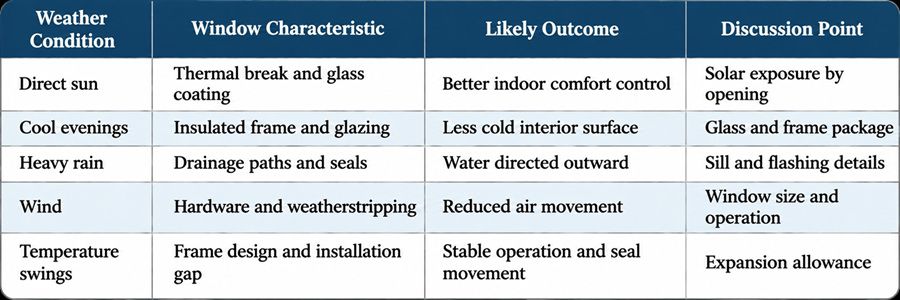
The right combination is rarely identical for every side of a house. A fixed picture window, a sliding unit, and an operable casement each have different frame proportions, sealing methods, and hardware demands.
Can Aluminum Handle Rain and Moisture?
Yes, aluminum can hold up well around rain and moisture because aluminum does not rust like steel. However, the metal itself is only one part of water management. A window must collect water, direct it to designated drainage paths, and prevent water from reaching the wall assembly.
Most exterior window systems use weep paths, which are small drainage routes that allow incidental water to exit. Those paths must remain open and correctly aligned. Seals and gaskets must also be continuous, particularly at corners and around operating panels where repeated use creates movement.
Flashing is equally important. Flashing is the layered material that directs water away from the opening and toward the exterior. If flashing, sill conditions, or exterior integration are wrong, a durable aluminum frame cannot compensate for them.
What can go wrong if water control is ignored? Water may move behind trim or into the wall around the window rather than appearing as an obvious indoor leak. Over time, that moisture can damage surrounding materials, stain finishes, and create a much larger replacement project than the original window concern.
When comparing all-weather architectural aluminum windows and doors, ask how the product manages drainage and how the opening will be prepared before the new unit is set. The answer should address the entire opening, not just the visible frame.
Wind Tests the Complete Window Assembly
Wind performance is not solely an aluminum-frame question. A window must resist pressure, stay square, maintain its seals, and operate correctly after repeated exposure to moving air.
Use this sequence to evaluate a window for exposed openings:
- Identify the most exposed windows. Note large glass areas, upper-floor openings, and sides of the home where wind is most noticeable around the frame or sash.
- Match the configuration to the opening. A wide sliding window, tall fixed unit, and operable casement place different demands on the frame, locks, rollers, and hinges.
- Ask about glass and hardware together. The glass thickness, sash design, locking points, and weatherstripping all affect how the complete unit responds.
- Discuss installation details. Proper shimming, fastening, insulation around the frame, and exterior water management help the window remain stable without binding or gaps.
- Check operation after installation. The sash should latch without force, move smoothly, and make even contact with its seals.
A stiff aluminum frame can be a useful part of a wind-ready design, especially in larger openings. Still, frame strength does not overcome undersized hardware, poor sealing, or an opening that is not properly prepared.
What Should Homeowners Evaluate Before Replacing?
Start by making a short selection brief for each room instead of choosing every replacement window from one general description. Note which openings receive direct sun, feel cold at night, collect condensation, face wind, or need more ventilation. Also record whether the room is a bedroom, kitchen, living space, or less-used area, since comfort priorities differ.
For replacement windows in Loomis, compare frame construction, thermal-break design, glazing options, drainage strategy, operating style, finish, and expected upkeep. If the house has older architectural details, window designs that respect Craftsman character can help guide the visual choices without overlooking performance needs.
A phased approach may also make sense when only certain rooms have urgent comfort or moisture concerns. This guide to planning window upgrades by room can help you sort priorities before selecting products.
This week, walk your home at different times of day and write down which windows feel hot, cold, drafty, damp, or difficult to operate. Those notes make discussions about replacement windows Loomis, CA projects more specific and useful. Talk with our team at California Craftsman, or call (530) 582-1822, to compare aluminum window options for the conditions at your home.